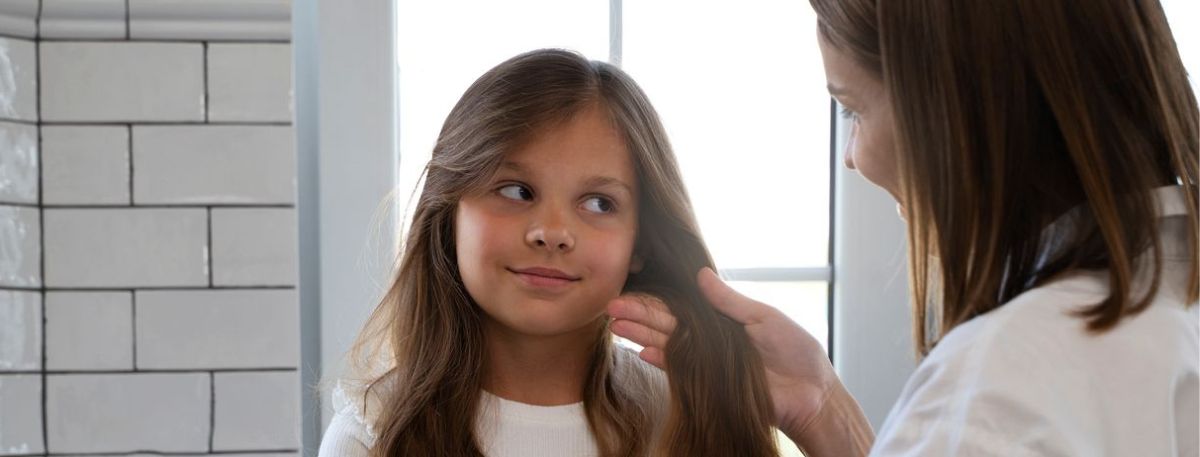
Alopecia areata is an autoimmune condition that causes hair loss when the immune system mistakenly targets healthy hair follicles. In children, recognizing early symptoms is especially important, as timely pediatric dermatology evaluation can help families understand the condition, reduce uncertainty, and explore appropriate care options.
Because alopecia areata does not cause pain or physical illness, early signs are often overlooked or mistaken for normal hair shedding. This guide helps parents understand how alopecia areata may present in children, what symptoms to watch for, and when to seek professional evaluation.
Understanding Alopecia Areata in Children
Alopecia areata occurs when immune cells interfere with the normal hair growth cycle. Hair follicles remain alive but temporarily stop producing hair. This leads to hair loss without scarring or permanent damage to the scalp.
In children, alopecia areata can develop suddenly and progress unpredictably. Some children experience limited hair loss with spontaneous regrowth, while others may have recurrent or more extensive patterns.
The condition is:
- Not contagious
- Not caused by poor hygiene
- Not the result of hair care practices
- Not a sign of overall poor health
Understanding this helps parents avoid unnecessary worry or self-blame.
Early Symptoms of Alopecia Areata in Children
Early recognition of alopecia areata symptoms can be challenging because the condition often begins subtly. Common early signs include:
Small, Round Patches of Hair Loss
The most recognizable symptom is smooth, circular patches of hair loss on the scalp. These areas typically have:
- No redness or scaling
- No pain or itching
- Normal-looking skin surface
Patches may appear overnight or gradually become noticeable.
Sudden Hair Thinning
Some children experience diffuse thinning rather than clearly defined bald spots. This may be noticed during brushing or bathing.
Eyebrow or Eyelash Changes
Alopecia areata can affect facial hair, leading to thinning or loss of eyebrows or eyelashes. This may occur with or without scalp involvement.
Less Common but Important Symptoms
While scalp hair loss is the most common presentation, alopecia areata can also cause additional signs that parents may overlook.
Nail Changes
Some children develop subtle nail changes, including:
- Small dents or pits
- Brittle or rough texture
- Nail thinning
These changes are not dangerous but may support a clinical diagnosis.
Body Hair Loss
In some cases, hair loss may affect arms, legs, or other body areas. This is less common in early childhood but may occur in adolescents.
Patterns of Hair Loss in Pediatric Alopecia Areata
Alopecia areata does not follow a single pattern. Pediatric dermatologists may observe different presentations, including:
- Patchy alopecia areata, involving one or more isolated scalp areas
- Alopecia totalis, where scalp hair loss becomes extensive
- Alopecia universalis, involving scalp and body hair
Not all children progress beyond mild or patchy hair loss. Many remain stable or experience regrowth.
How Symptoms May Change Over Time
Alopecia areata is known for its unpredictable course. Children may experience:
- Periods of hair loss followed by regrowth
- New patches developing as others improve
- Stable disease without progression
Hair regrowth may appear white or lighter initially and gradually regain normal color. This variation is normal and does not indicate treatment failure.

How Pediatric Dermatologists Diagnose Alopecia Areata
Diagnosis is typically made through a clinical examination. Pediatric dermatologists evaluate:
- Shape and location of hair loss
- Condition of the scalp skin
- Presence of nail or eyebrow changes
- Family history of autoimmune conditions
In most cases, no blood tests or scalp biopsies are required. Early diagnosis allows families to understand the condition and discuss appropriate monitoring or care strategies.
When Should Parents Seek Medical Evaluation?
Parents should consider pediatric dermatology evaluation when:
- Hair loss appears suddenly or progresses quickly
- Bald patches enlarge or multiply
- Hair loss affects eyebrows or eyelashes
- The child experiences emotional distress related to appearance
- There is uncertainty about the cause of hair loss
Early evaluation does not mean aggressive treatment is required. Often, the goal is education, reassurance, and appropriate follow-up.
Why Early Recognition Matters
Recognizing alopecia areata symptoms early provides several benefits:
- Reduces uncertainty and anxiety for families
- Prevents unnecessary treatments for misdiagnosed conditions
- Allows emotional support to begin sooner
- Creates opportunities to learn about research options when appropriate
Early education empowers families to manage expectations and make informed decisions.
Differentiating Alopecia Areata from Other Causes of Hair Loss
Not all childhood hair loss is alopecia areata. Pediatric dermatologists distinguish it from conditions such as:
- Traction alopecia from tight hairstyles
- Fungal scalp infections
- Hair pulling behaviors
- Nutritional deficiencies
Accurate diagnosis ensures appropriate guidance and avoids ineffective or unnecessary interventions.
Emotional Impact of Alopecia Areata Symptoms
Children may react differently to hair loss depending on age and personality. Some common emotional responses include:
- Self-consciousness or embarrassment
- Anxiety about school or social interactions
- Frustration over unpredictable changes
Parents can support children by:
- Encouraging open conversations
- Avoiding negative language about appearance
- Reinforcing self-worth beyond physical traits
Pediatric dermatology care recognizes emotional health as a key part of management.
The Role of Clinical Research in Pediatric Alopecia Areata
Clinical research helps advance understanding of alopecia areata in children. At PedSkin Research, pediatric-focused studies explore investigational therapies and disease patterns under careful medical oversight.
These studies aim to:
- Improve understanding of immune-related hair loss
- Evaluate safety in pediatric populations
- Support development of future care guidelines
Participation in research is optional and based on eligibility criteria.
Supporting Families Through Education and Monitoring
Education is central to managing alopecia areata. Families benefit from understanding:
- The autoimmune nature of the condition
- The variability of disease progression
- The importance of regular follow-up
Monitoring allows pediatric dermatologists to adjust care recommendations as children grow and their needs change.
Learn More About Pediatric Alopecia Research
Children diagnosed with alopecia areata may qualify for clinical research studies depending on age and disease characteristics. Educational resources help families explore available options without obligation.
Our Location
Coral Gables
4425 Ponce de Leon #115, Coral Gables, FL 33146, United States
Nearby Cities:


Request An Appointment
To request an appointment, please fill out the contact form below. Our team will get back to you as soon as possible to confirm your appointment and answer any questions you may have.
We look forward to assisting you.
Meet Our Medical Director
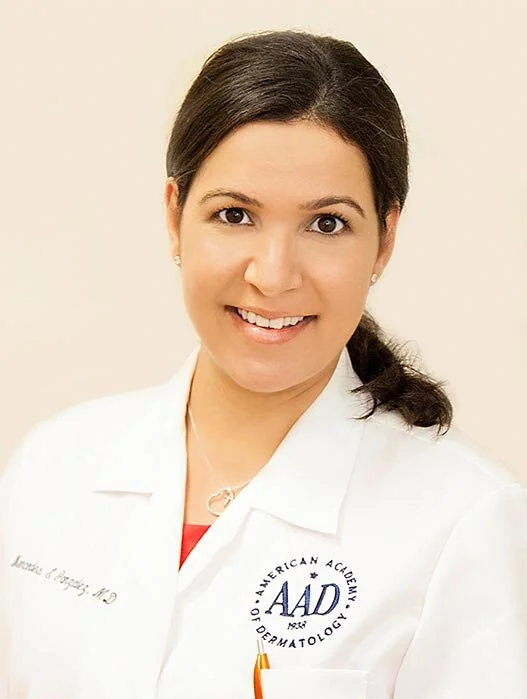
Mercedes E. Gonzalez M.D.
Dr. Mercedes E. Gonzalez is a board-certified pediatric dermatologist. After graduating from Emory University, she earned her degree at Rutgers–New Jersey Medical School in 2004. Always drawn to working with children, she accepted the prestigious pediatrics program at the Morgan Stanley Children’s Hospital of New York–Columbia University where she solidified her interest in treating skin disorders. She then completed a dermatology residency followed by a clinical fellowship in pediatric dermatology at the top-ranked New York University (NYU) Department of Dermatology.
Her gentle, child-friendly bedside manner, combined with her broad knowledge of childhood skin diseases and their treatments, make her the preferred pediatric dermatologist in Miami. In addition to practicing medicine, Dr. Gonzalez currently serves as a clinical assistant professor at The FIU Herbert Wertheim School of Medicine and The Phillip Frost Department of Dermatology at Miller School of Medicine.
Dr. Gonzalez serves as the Principal Investigator on numerous clinical trials and has a special interest in severe skin disease in children. She lectures regularly at Dermatology conferences and to medical students and residents and is the co-editor of 3 dermatology textbooks, including the recently published 2nd edition of Goodheart’s Same Site Differential Diagnosis, and has published over 50 journal articles.