
Plaque psoriasis is a chronic inflammatory skin condition that can affect children at any age, including infants, toddlers, and adolescents. While often associated with adults, pediatric plaque psoriasis is increasingly recognized in clinical settings. Early identification plays an important role in helping families understand the condition, reduce discomfort, and access appropriate pediatric dermatology care.
At PedSkin Research, families can learn more about how plaque psoriasis presents in children, how it is evaluated by pediatric dermatology specialists, and how clinical research contributes to expanding treatment knowledge for pediatric patients.
What Is Plaque Psoriasis in Children?
Plaque psoriasis is an immune-mediated skin condition characterized by accelerated skin cell turnover. This rapid turnover leads to the buildup of thickened, scaly patches on the skin surface known as plaques. In children, the condition may present differently than in adults, often appearing less defined and more subtle in its early stages.
Psoriasis is not contagious and cannot be spread through physical contact. It is influenced by immune system activity and genetic predisposition rather than hygiene or environmental cleanliness.
Understanding Plaque Psoriasis Early Stages
The early stages of plaque psoriasis in children can be difficult to recognize. Initial symptoms may resemble other common pediatric skin conditions such as eczema, cradle cap, or contact dermatitis.
Early-stage plaque psoriasis may present as:
- Small, slightly raised patches of dry or scaly skin
- Mild redness with minimal scaling
- Areas of skin that appear irritated but not severely inflamed
- Lesions that gradually increase in size or thickness
Because early plaques are often subtle, parents may not immediately suspect psoriasis. Over time, these patches may become more defined, thicker, and covered with silvery-white scales.
Common Areas Affected in Children
Plaque psoriasis in children may appear in different locations compared to adults. Common pediatric sites include:
- Scalp and hairline
- Behind the ears
- Elbows and knees
- Lower back
- Diaper area in infants
Scalp involvement is particularly common and may be mistaken for dandruff or seborrheic dermatitis in early stages.
Symptoms That Differentiate Psoriasis from Other Conditions
While eczema and psoriasis can look similar, there are features that help pediatric dermatologists distinguish plaque psoriasis:
- Sharply defined plaques rather than diffuse redness
- Thicker scaling compared to eczema
- Less intense itching in some cases
- Symmetrical distribution of lesions
Accurate diagnosis is essential, as management strategies differ between inflammatory skin conditions.
How Pediatric Dermatologists Diagnose Plaque Psoriasis
Diagnosis is typically made through a clinical evaluation. Pediatric dermatologists assess:
- Appearance and location of lesions
- Duration and progression of symptoms
- Family history of psoriasis or autoimmune conditions
In most cases, laboratory testing is not required. A skin biopsy may be considered in rare or uncertain cases but is generally avoided in young children unless necessary.

Why Early Recognition Matters
Recognizing plaque psoriasis in its early stages allows families to:
- Understand the chronic nature of the condition
- Reduce physical discomfort and irritation
- Prevent unnecessary treatments for misdiagnosed conditions
- Establish consistent pediatric dermatology follow-up
Early education also helps families manage expectations, as psoriasis often follows a relapsing and remitting course.
Pediatric Dermatology Care for Plaque Psoriasis
There is no single treatment approach suitable for all children with plaque psoriasis. Pediatric dermatology care is individualized based on:
- Child’s age
- Extent and severity of skin involvement
- Location of lesions
- Response to previous treatments
Management focuses on symptom control, skin barrier support, and minimizing flare-ups while prioritizing safety.
Supporting Families Through Education
Education empowers families to make informed decisions and reduces uncertainty. At PedSkin Research, families receive clear information about:
- The autoimmune nature of alopecia areata
- Expected variability in disease course
- Available care and research pathways
This knowledge helps families navigate the condition with greater confidence and preparedness.
Common Management Approaches in Pediatric Psoriasis
Pediatric dermatologists may discuss several management strategies, including:
Topical Therapies
Topical medications are often the first line of care. These may help reduce inflammation, scaling, and redness when applied consistently under medical guidance.
Moisturization and Skin Care
Maintaining skin hydration is essential. Gentle cleansers and regular moisturizing can help support the skin barrier and reduce irritation.
Scalp-Specific Treatments
For children with scalp involvement, specialized topical formulations may be used to manage scaling while minimizing discomfort.
Observation and Monitoring
Mild cases may be managed with close monitoring, particularly when symptoms are minimal and not disruptive to daily life.
Treatment decisions are carefully adjusted over time to reflect the child’s growth and changing skin needs.
Triggers That May Influence Pediatric Psoriasis
While psoriasis is immune-mediated, certain factors may influence flare-ups, including:
- Upper respiratory infections
- Skin injury or irritation
- Environmental changes
- Emotional stress
Identifying potential triggers can help families anticipate and manage symptom changes.
The Role of Clinical Research in Pediatric Psoriasis
Clinical research plays a vital role in improving understanding of pediatric psoriasis. At PedSkin Research, clinical studies evaluate investigational therapies and management approaches designed specifically for children and adolescents.
Research studies aim to:
- Improve safety data for pediatric treatments
- Explore immune pathways involved in psoriasis
- Support development of future pediatric guidelines
Participation in research studies is voluntary and conducted under strict ethical and medical oversight.
Why Pediatric-Focused Research Is Important
Children have unique physiological and immune responses that differ from adults. Pediatric clinical research ensures that emerging therapies are evaluated with age-specific safety and effectiveness considerations in mind.
Families participating in research contribute to advancements that may benefit future pediatric patients while receiving structured follow-up and education.
Emotional and Social Impact of Psoriasis in Children
Visible skin conditions can affect a child’s confidence and social interactions. Children with plaque psoriasis may experience:
- Self-consciousness about appearance
- Anxiety related to peer interactions
- Frustration with recurring symptoms
Pediatric dermatology care emphasizes emotional well-being alongside physical symptom management. Parents can support children by fostering open communication and reinforcing positive self-image.
Family Education and Long-Term Outlook
Psoriasis is considered a long-term condition, though symptom severity can vary over time. Education helps families understand:
- The chronic but manageable nature of psoriasis
- The importance of consistent skin care
- The value of regular dermatology follow-up
With appropriate care and support, many children are able to manage symptoms effectively and maintain a high quality of life.
Learn More About Pediatric Psoriasis Research
Children diagnosed with plaque psoriasis may qualify for clinical research studies depending on age, diagnosis, and disease characteristics. Educational resources and research opportunities are available to help families explore whether participation is appropriate.
Our Location
Coral Gables
4425 Ponce de Leon #115, Coral Gables, FL 33146, United States
Nearby Cities:


Request An Appointment
To request an appointment, please fill out the contact form below. Our team will get back to you as soon as possible to confirm your appointment and answer any questions you may have.
We look forward to assisting you.
Meet Our Medical Director
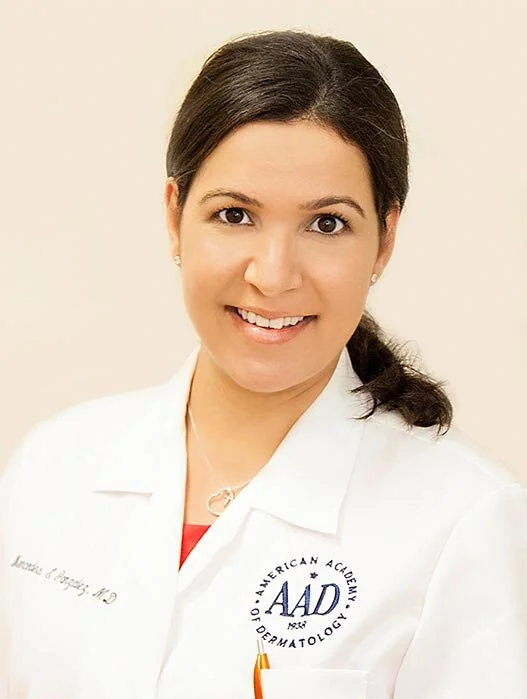
Mercedes E. Gonzalez M.D.
Dr. Mercedes E. Gonzalez is a board-certified pediatric dermatologist. After graduating from Emory University, she earned her degree at Rutgers–New Jersey Medical School in 2004. Always drawn to working with children, she accepted the prestigious pediatrics program at the Morgan Stanley Children’s Hospital of New York–Columbia University where she solidified her interest in treating skin disorders. She then completed a dermatology residency followed by a clinical fellowship in pediatric dermatology at the top-ranked New York University (NYU) Department of Dermatology.
Her gentle, child-friendly bedside manner, combined with her broad knowledge of childhood skin diseases and their treatments, make her the preferred pediatric dermatologist in Miami. In addition to practicing medicine, Dr. Gonzalez currently serves as a clinical assistant professor at The FIU Herbert Wertheim School of Medicine and The Phillip Frost Department of Dermatology at Miller School of Medicine.
Dr. Gonzalez serves as the Principal Investigator on numerous clinical trials and has a special interest in severe skin disease in children. She lectures regularly at Dermatology conferences and to medical students and residents and is the co-editor of 3 dermatology textbooks, including the recently published 2nd edition of Goodheart’s Same Site Differential Diagnosis, and has published over 50 journal articles.