


We tried every cream and every wash. It would get a little better, then come right back.
Acne is more than a phase for many teens. When breakouts keep coming back after months of creams, washes and pills, it can affect how they feel at school, in photos and around friends. This study is looking at a different approach: a pill designed to reduce the skin oil that feeds acne in the first place.
Adults 18 and older with acne may also be eligible.
What does your family receive?
A specialized program
Access to board-certified pediatric specialist in skin conditions
Keep on Track
Close care and monitoring from specialist throughout the study
Reimbursements
Compensation for your time and reasonable travel expenses.
Unlock answers for their unique skin
The study tests denifanstat, an investigational pill taken daily. It’s not FDA-approved for acne and is only available in research studies.
Denifanstat blocks an enzyme the skin uses to make oil (sebum), which causes acne.
The study aims to assess denifanstat’s safety and effectiveness compared to a placebo in teens and adults with moderate to severe acne.
About 800 people, including 450 teens aged 12 to 17, will participate at 55 study sites across North America.
The study follows a double-blind design, where participants are randomly assigned to receive either denifanstat or a placebo. Neither the family nor the study team knows which treatment each participant receives. In emergencies, the study doctor can determine the treatment..
Optional Extension
At week 12, some participants may be offered an additional 40 weeks in which everyone takes denifanstat. Participants who received the placebo will be offered this extension. However, only a subset of participants who received denifanstat will be offered a place in the extension. Joining the extension requires a separate consent.
Screening (up to 30 days) – 1 visit
Physical exam, blood and urine tests, an eye exam with an eye doctor, an acne count, and facial photos to confirm your teen qualifies.
Treatment (12 weeks) – 4 visits: Day 1, weeks 4, 8, and 12
We will take an acne count and photos, do blood and urine tests, perform an ECG (a quick, painless heart tracing), and provide the study pill.
Optional extension (weeks 12 to 52) – 3 visits and 6 phone calls
Visits at weeks 26, 39 and 52, with monthly phone calls in between. Everyone in the extension takes denifanstat.
Safety follow-up (2 weeks after the last dose) – 1 visit
A final check-up.
Total time
Without the extension: about 4 months and 6 visits.
With the extension: about 13 months, 9 visits and 6 phone calls.
The information you share in the pre-screening form is kept confidential and is used only to see whether your teen might qualify. Filling out the form does not enroll your teen in the study and does not commit you to anything. No study tests or procedures are done until the consent form (and, for teens, the assent form) is signed.Your child’s personal and medical information will be handled in accordance with applicable privacy laws and research regulations. Submitting your information does not obligate you to participate in the study.
Does your teen meet the basic criteria?
Children may be eligible if they meet the following general conditions. A study team member will review your child’s full history during the screening process.
Basic eligibility criteria
Research available for adults as well
Mostly on the face (inflamed pimples plus blackheads or whiteheads)
Up to 50% of scalp hair loss, a doctor can help determine this request
Can come to all study visits and take the study pill every day
What happens if we enroll?
Why participate in a research study?
“Clinical research plays a crucial role in providing children with access to new treatments and advancing medical knowledge for future generations. Our mission is to create new opportunities for children and families by advancing research and ensuring that they have access to innovative therapies that have the potential to transform lives”.
Dr. Mercedes E. González
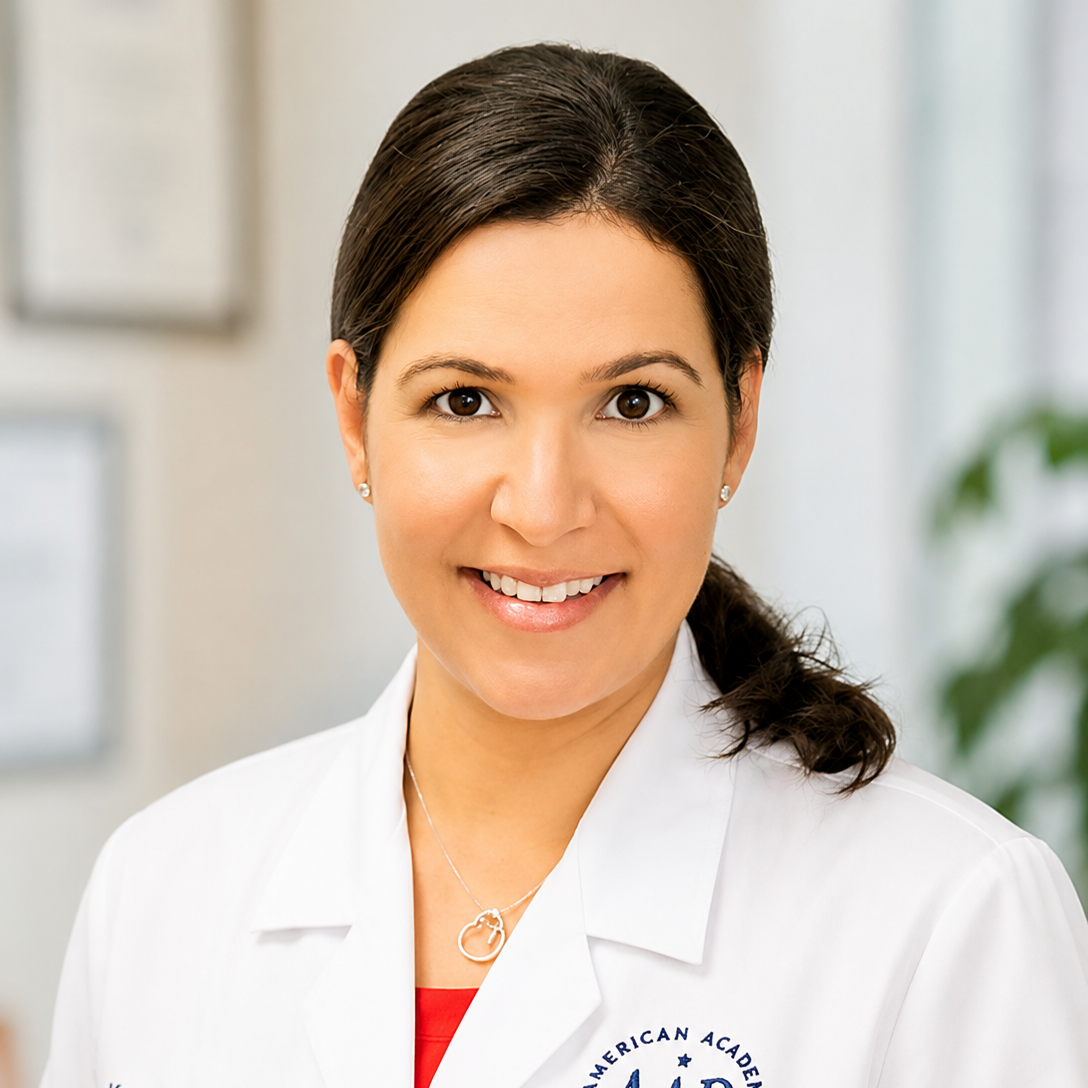
Pediatric Dermatology Specialist &
Principal Investigator.
Founder of Pediatric Skin Research
Pre-screening
Complete a short form to see whether your child may be eligible based on basic criteria. No medical records needed at this stage.
Screening visit
If the pre-screen looks promising, you’ll meet with the study team in person. They’ll review your child’s history, examine the affected areas, and answer every question you have before any decisions are made.
Participation (if eligible)
Enrolled participants apply the investigational cream as directed and attend follow-up visits with the study team. Your child will receive close medical monitoring throughout, from vitiligo specialists.
Study Completion
The study team will walk you through what happens after the study ends, including next steps for your child’s ongoing care.
What parents ask us most
Get straightforward explanations about how the research works, what it does, and how it supports your child’s health journey.

Your teen may qualify for this study.
If your child has severe alopecia areata and is between the ages of 12 and 17, find out in less than 2 minutes whether they may be eligible to participate at no cost to your family.
It only takes 20 seconds.
© 2026 PEDSKIN Research
All rights reserved
This is a research facility. Treatments are investigational.
Participation is voluntary.